Hoarding
Do you think you are a compulsive hoarder?
- Do you have an excessive amount of clutter that limits
living space?
- Do have difficulty categorizing and organizing items?
- Are you holding onto possessions that seem of little or no
value?
- Have Severe anxiety when trying to throw out an object?
- Have Trouble making decisions about possessions?
- Feeling anxious, embarrassed or depressed because of clutter
- Fears about needing items that could be thrown away.
If you answered yes to more than one of the questions you
are a compulsive hoarder and need help from A professional organizer along with a therapist to work on the
emotional issues. I have several therapists I can recommend
Compulsive hoarding is different than chronic
disorganization. Yes, aspects of chronic disorganization also
apply to hoarders; but there are also important distinguishing
features. A hoarder's home totally loses its functionality. A
kitchen is no longer a kitchen. A bedroom is no longer a
bedroom. The home becomes a jangled mess of storage for an
indistinguishable mass of useless and useful stuff. And the
disorganization affects the safety and health of the hoarder and
their loved ones. Organizing by itself, though it can be
therapeutic, does not always get to the bottom of things, so to
speak, because the issue is not just "the stuff" but the person
and their way of thinking.
Maybe you read the sad story of the woman in Sandy Springs,
Georgia who had to be extricated by the Fire Department from her
home heaped to the ceiling with stuff. The Atlanta Hoarding Task
Force is in touch with city authorities to see if we can be of any
support. If you know someone whose health or safety is seriously
compromised by clutter, contact the Institute of Challenging
Disorganization Organization to reach an hoarding specialist.
http://www.ICD.org
Collector or hoarder?
Many people have collections that occupy a great deal of home space and leisure time, but they differ from hoarders in important ways. For example, they usually enjoy showing off their collections, while hoarders are often embarrassed and do their best to prevent others from seeing what they've accumulated.
Distinguishing between collectors and hoarders |
|
Collectors |
Hoarders |
| Take pride in their collections. | May be embarrassed by their possessions. |
| Organize and care for their collections. | Have homes cluttered with disorganized possessions. |
| Enjoy showing others their collections. | Avoid letting people see their homes and possessions. |
| May budget for collection expenses. | Often go into debt with compulsive buying. |
| Take pleasure in acquiring new items. | May feel depressed and ashamed when they need to add to their possessions. |
| Usually choose items that are also of value or interest to others. | Acquire and keep things that no one else would be interested in, such as junk mail. |
| Source: Adapted from Overcoming Compulsive Hoarding, by Fugen Neziroglu, Ph.D., Jerome Bubrick, Ph.D., and Jose A. Yaryura-Tobias, M.D. (New Harbinger, 2004). | |
What's behind it?
It's unclear where compulsive hoarding comes from; research has shown that it isn't correlated with material or emotional deprivation earlier in life. Psychologists have identified a pattern of cognitive and emotional difficulties that underlie hoarding symptoms. These are as follows:
Indecisiveness and fear of making mistakes
By never choosing to throw anything out and constantly accumulating things "just in case," the hoarder tries to avoid making wrong decisions or having regrets.
Difficulty categorizing
A person who has a hard time sorting objects into categories can find it difficult to decide which drawer something belongs in. For a person who has difficulty distinguishing between valuable and worthless items, keeping old supermarket flyers may seem as sensible as keeping last year's tax return.
Concerns about memory
A hoarder may have unjustified doubts about the reliability of her memory and therefore avoid putting things away for fear of not being able to find them again. Dresser drawers remain empty while clothes pile up on furniture and the floor. Old newspapers and magazines are saved for fear the information in them will be forgotten if they're not kept on hand.
Emotional attachment to objects
A hoarder often comes to see beauty and value in clutter and develops a sentimental attachment to it. This heightens her enthusiasm for acquiring things and reluctance to discard them.
Need for control
The hoarder usually doesn't want anyone else to make decisions about her possessions, so it can be difficult for the family to help.
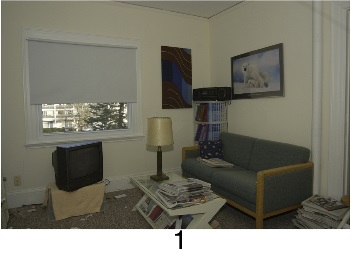
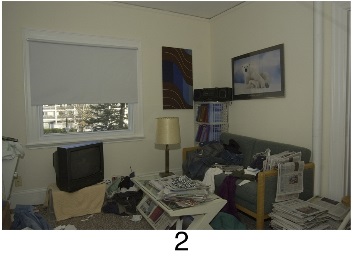
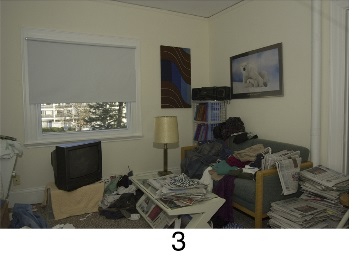
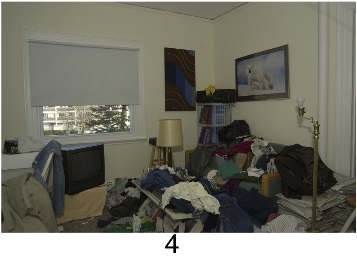
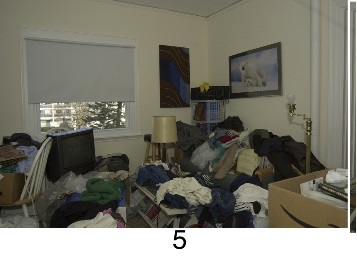
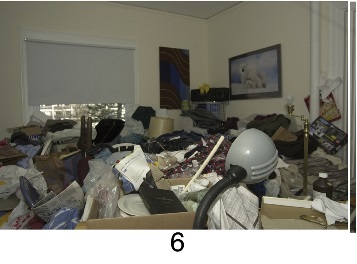
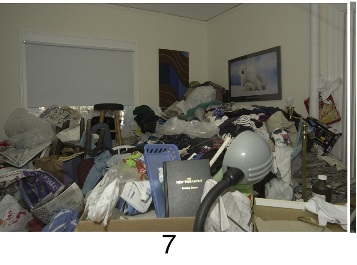
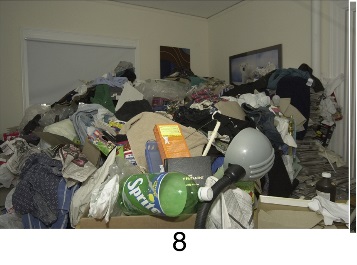
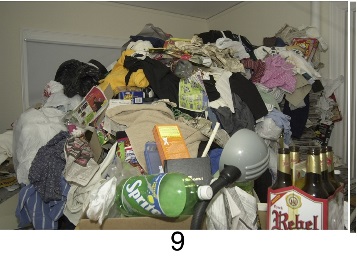
Clutter Image Rating: Living Room
Please select the photo below that most accurately reflects the amount of clutter in your room
 |
 |
 |
 |
 |
 |
 |
 |
 |
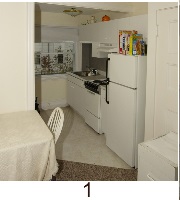
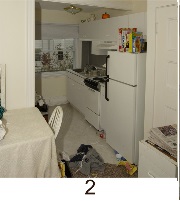
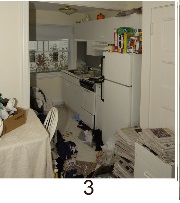
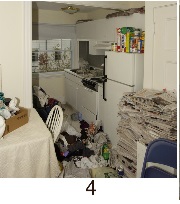
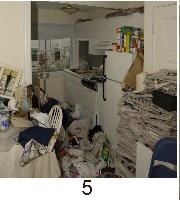
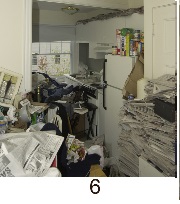
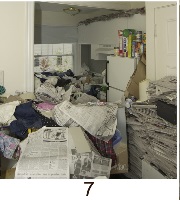
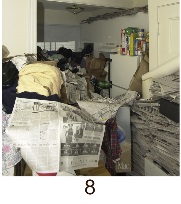
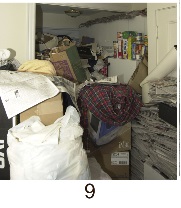
Clutter Image Rating: Kitchen
Please select the photo below that most accurately reflects the amount of clutter in your kitchen
 |
 |
 |
 |
 |
 |
 |
 |
 |
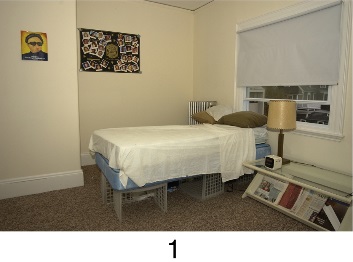
Clutter Image Rating: Kitchen
Please select the photo below that most accurately reflects the amount of clutter in your kitchen
 |
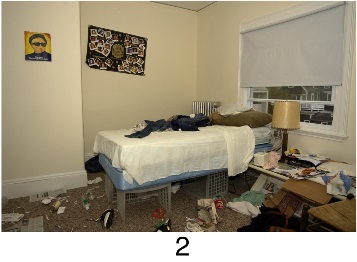 |
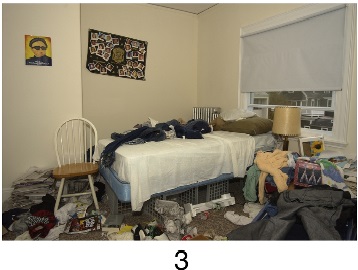 |
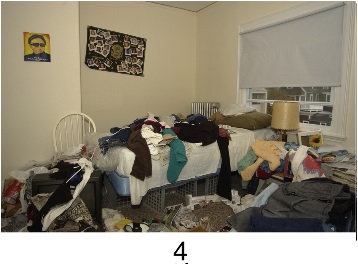 |
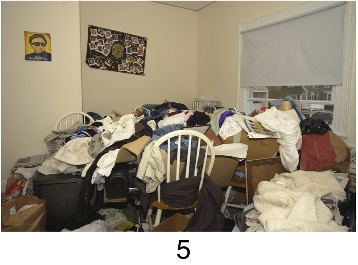 |
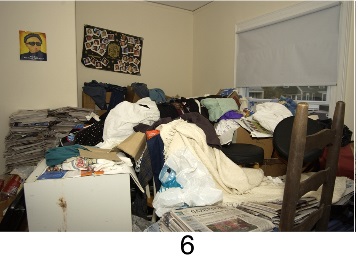 |
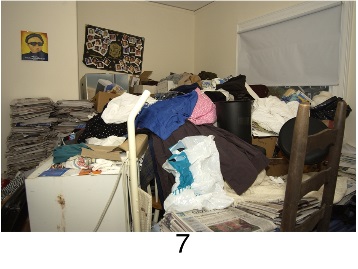 |
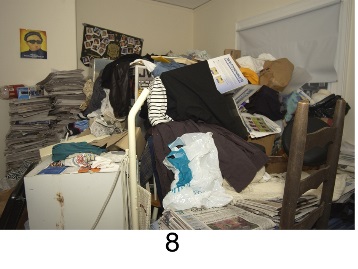 |
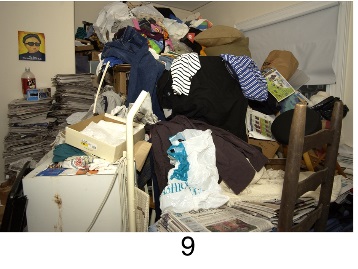 |
addiction is an emotional thing
Dr Kristin P. Bergfeld
In recognition of our 30 years in business, BERGFELD's was awarded this Proclamation by Assembly, State of New York. "Whereas, BERGFELD's...has provided its clientele with support and resources to approach clearing out, downsizing or leaving a home with peace of mind and should be commended for its service to families across New York City...for its truly remarkable achievement on this momentous anniversary."
The office of Assembly Member, Daniel J. O'Donnell, Assembly District 69.
On July 15, 2016 BERGFELD's celebrated the first day of our 30th year of business! Thanks to all who have helped make this possible. We look forward to many more successful years.
BERGFELD's Clearance Service was recently certified as a Women-owned Business Enterprise (WBE) by the New York City Department of Small Business Services.
Kristin Bergfeld is one of five authors of the Clutter Hoarding Scale™, revised in 2011, and published by ICD (Institute for Challenging Disorganization formerly National Study Group for Chronic Disorganization). The ICD Clutter-Hoarding Scale™ is available as a free download. Simply go to the CHS page on the ICD website to download.
BERGFELD's featured on CBS News 11:00PM, 27 September, 2010, in the "Secret World of Hoarding"
26 August, 2010
Big article featuring BERGFELD's in The New York Times
In a Horder's Home. Going All Out to Find the Floor
BERGFELD's was the focus of CBSTV National News prime time slot on March 14, 2008 - Click to view: "Hoarding By Nature"
12 May, 2006
The Wall Street Journal published an extensive, front page article
about BERGFELD's:
"Grandma, the Packrat: New Approach Finds Pearls Amid the Junk.
Declutterers Reunite Hoarders With Buried Possessions; Diamonds in
the Luggage" In this story Kelly Greene, award winning WSJ
journalist on issues relating to aging, focuses on our work with one
of our elder clients to clear and reconfigure her home.
BERGFELD's is a member of: Institute for Challenging Disorganization, National Association of Professional Organizers, Business Forum on Aging, American Society on Aging, more
Cynthia Braun is a certified professional organizer for Suffolk County and Nassau County, New York